Sunday, 13 January 2013

Review: Gangster Squad

Rating: 15
Duration: 113 mins

The aftermath of mass media panic halted Ruben Fleischer's third feature from a September 2012 release, after succumbing to moral obligation to remove a cinema shooting, and reschedule for an early 2013 one. In truth, the omission of this infamous scene isn't missed or seemingly required in the context of the film in its newer cut, but all this would be more significant if the film in question was actually worth the wait.

The American director's previous film, 30 Minutes or Less, is nothing to write home about, instead relying on his debut, Zombieland, in which to showcase his talents. Attaining a solid cast including Sean Penn, Ryan Gosling and Josh Brolin, as well as the framework from the existing Paul Lieberman novel, are solid foundations, but instead of creating something to rival the likes of L.A. Confidential, it ends up falling short of the decidedly average Mulholland Falls. 

With little positives to speak of other than a mild sense of entertainment value in a handful of moments, they're largely nullified by the noticeable errors of its ways. Its biggest detriment is credibility, and the 1949 world Gangster Squad bases itself in looks anything but. Whereas L.A. Confidential oozed an authentic 50s crime noir aesthetic, this couldn't be more contrasting; saturated colours; clean, neatly costumed characters; a cliché-riddled script; and painfully staged settings are more akin to Bugsy Malone as opposed to anything intended to be taken seriously. 

This comparison to a preteen crime flick is accentuated by its performances, too. Whether it be Sean Penn's ham-fisted depiction of tyrant Mickey Cohen or Ryan Gosling's Truman Capote impersonation, the entire ensemble appear to have been reading different scripts because there's a complete lack of understanding and enthusiasm across the board, especially from squad leader Brolin. Importantly, the requirement of chemistry -- specifically during the romance subplot concerning Ryan Gosling and Emma Stone -- is essential, but proves non-existent. Any hint of eroticism or sexual tension is swiftly extinguished, much like the validity of the film itself.

Rather than explore interesting or complex sub plotting, Gangster Squad is the naive, overzealous and all too often embarrassing younger sibling to The Untouchables; one tries not to compare the two, but is forced by mere association. Not once does it threaten with intelligence or offer thought provoking insight, instead opting for tepid entertainment (and by that, this simply involves copious amounts of gun fire and loud noises). It's pretty one-dimensional in terms of telling a bare bones story pursuing Cohen, and at least, in this respect, it sticks to a leveled playing field of providing action sequences and entertainment in a most basic form. However, this simply won't be enough for anyone who wishes to enter with their brain engaged: there isn't anything resembling sophistication other than a group of rogue officers spraying as many bullets as possible at any given target.

Gangster Squad fails to meet even a satisfying degree of fulfilment; it's devoid of depth with its no-frills plot, favouring clumsy recreation rather than the effective crafting of an authentic period movie. The acting, again, bases its mannerisms, dialogue and delivery on mid-20th Century movie stereotypes, which feels clunky and wholly unflattering for those involved. 

Saturday, 12 January 2013

Review: The Impossible

Rating: 12a
Duration: 114 mins
  
Regardless of the praise or controversy surrounding the latest real-life tragedy depicted on the big screen, The Impossible is undoubtedly token Oscar fodder, but less crass in comparison to last year's inclusion of Extremely Loud and Incredibly Close, that's for sure.

Even though Spanish director Juan Antonio Bayona bases the true story on the account of a Spanish family, it is adapted for English-speaking audiences with the recognisible faces of Naomi Watts and Ewan McGregor. What's clear is the hugely contrived setup for the impending tsunami disaster that struck on Boxing Day 2004, and even though it is a necessity to construct an idyllic family holiday before the inevitable horror, it does so in heavy-handed fashion. Whist some have focused critically on the Anglicisation, it shouldn't have dominant relevance when exploring the issues and context of these characters presented within this particular story. 

Obligatory exposition out the way, the initial impact of the tsunami is nothing other than devastating. It is scenes such as these that are tackled in a way that balances the sheer horror and deft poignancy to commendable effect. The CGI feels large-scale enough for impact, yet subtle enough for believability, which is one of the film's strongest claims.

However, aside from the emotion generated and horror visualised, particular plot points (in the latter scenes especially) feel terribly staged for an audience pay off. Coincidence dominates the conclusion offering an outcome of hope and resolve rather than a more realistic acceptance and inevitability of reality in the wake of such a catastrophe. It's obviously to be expected for a) a Hollywood disaster movie, and b) as something that strives to appeal to the Academy.

Performances peak with Watts, who demands more screen time than her male counterpart and perhaps warrants her Oscar nod. McGregor, however -- aside from one particularly devastating scene -- offers a consistent if not outstanding turn. The couple's children, specifically Lucas (Tom Holland), perform well considering a lack of experience. Unfortunately, it is the inconsequential characters that make up the swampy mainland that deliver wooden, awkward lines of dialogue that threatens to remove audiences from the very real, engrossing dangers of the environment they've invested in.

The Impossible possesses a clear intention to appeal to human nature, relying on a handful of tremendously poignant moments to affect, overwhelm and completely engage its audience. However, in a film that, for one reason or another, decides to alter factual certainties for entertainment, audiences will still willingly succumb to the emotional blackmail on offer in the form of this effective but contrived melodrama.

Saturday, 29 December 2012

Top 12 of 2012

I'm not messing about with this one. No plugs; no chit-chat; no waffle (besides this).

Honourable mentions

Alps
Sightseers
The Imposter
Moonrise Kingdom
The Hunger Games
Silver Linings Playbook


12 of the best (all films as per released in UK cinemas in 2012)

#12 Skyfall

#11 Hara-Kiri: Death of a Samurai

#10 21 Jump Street

#9 Rust and Bone

#8 Excision

#7 Life of Pi

#6 The Descendants

#5 Wild Bill

#4 The Dark Knight Rises

#3 The Master

#2 Amour

#1 Shame

Roll on 2013...

Friday, 14 December 2012

Review: The Hobbit: An Unexpected Journey

Rating: 12a
Duration: 169 mins

NOTE: this review is based on 2D, 24fps.

Echoes of a collective groan emanated from the deepest, darkest bowels of the Internet when it was announced that Peter Jackson’s latest tackling of Tolkien literature would be split into three (yes, three) separate films. Rightly or wrongly jeered, there are always a number of  Jackson certainties a film of such magnitude box ticks: grandiose spectacle, jaw-dropping CGI and masses of indulgence. The Hobbit – all 169 minutes of it – bodes well in terms of the first two, but in typical Jackson fashion, is slightly bogged with sentimentality in the cutting room.  But that’s not to say this first instalment isn’t a good one, though.

As young Bilbo is introduced (Martin Freeman) in the quaint vibrancy of The Shire, aesthetically it feels as viable and convincing as the multi-Oscar winning excellence of The Lord of the Rings. New characters are introduced as fluently as old ones are reacquainted, notably the divine Sir Ian McKellen as Gandalf, as both premise and context are established, the following set up is more akin to The Fellowship of the Ring, as it practically retraces its steps. This comparison can be detected throughout, and whilst it may seem a mild hindrance, it doesn’t necessarily stifle the film.

Visually the entire film is a marvel. Wonderfully conceived and executed, it’s sure to be a strong contender for Oscars in technical achievements, not simply due to the breathtaking CGI for Andy Serkis’ Gollum, which is noticeably superior to Weta’s efforts a decade previous, but also for its conscientious strive to dazzle and amaze, much like LotR did. The journey that Bilbo, Gandalf and band of dwarves embark on is fundamentally a series of escapades that differ from whimsy adventure to life-threatening peril, yet are linked by stunning set pieces and special effects that make these moments all the more exceptional.

Once the film’s overarching expedition does kick in, audiences are whisked into Middle-Earth to bear witness to misadventures that literally encumber their progress. However, it’s the beginning of the film that opens laboriously, taking its sweet time to get things going. The pace is noticeably gradual and will no doubt frustrate some, but can be forgiven because the entirety doesn’t drag as one might imagine. Occasional scenes see it plod, but Martin Freeman forges a fresh take on Bilbo Baggins that’s quintessentially British that proves hugely charming in both quips and subtlety of facial expression. Similarly, Sir Ian McKellen is on top form as Gandalf, too, as such established characters stand out against the largely indistinct band of dwarves (including James Nesbitt) that form the backbone of the travelling party.

The Hobbit is more whimsy, accessible and light-hearted than some of the darker and frankly more terrifying aspects of The Lord of the Rings trilogy, but still crams so much in and exudes an epic severity the impending excursion is about to offer, and does so in gorgeous style with unrivaled special effects.  In honesty, with two further films to come, it does feel a tad stretched for a single 320-pager, but possesses more than enough good to quash the bad; Freeman begins his quest to Lonely Mountain on a positively delightful note.

Wednesday, 14 November 2012

Review: Amour

Rating: 12a
Duration: 127 mins

Every so often you come across a film so profoundly powerful that it has lasting effect way beyond the final credits. In rare instances a motion picture can be so emotionally overwhelming that you'll remain devastated for days after. Michael Haneke's latest, Amour, is no exception.

The Austrian director's Palme d'Or winner is portrayed with a simplistic elegance and grace that deems it an utterly mesmerising experience, but one you'll never wish to impose upon yourself again. The subject matter: old age, unequivocal love and devotion in the context of mental health deterioration.

About an elderly couple -- Georges (Jean-Louis Trintignant) and Anne (Emmanuelle Riva) -- Haneke devises a sumptuously poignant story that primarily centres on the two, requiring very little external interference, other than a few supporting roles that interject throughout. As we settle into the pace and routine of their lives, an incident takes place one nonchalant morning that forms the premise for the two hour filmic journey of Anne's onset of dementia.

So uniquely divergent from Hollywood is Haneke's overt style, it's easy to pick up on both the use of long, static, richly composed shots, with slow, methodical pans and tracks, as well as the strong character-focused narrative that uses an apartment as its solely filmed location. 

The most deftly balanced and striking aspect of all is the phenomenal quality of acting on display. The sheer scope of emotions that transcend over the duration are breathtaking. There's so much to take in: from heartfelt adoration; to unfathomable dedication; to gut-wrenching endurance. Audiences will unquestionably be left despondent, exhausted and grief-stricken by the events of a harrowing subject matter that's bound to affect those with similar life experiences even more than those detached from it.

The depiction of both physical and mental ageing is fascinating, and effortlessly immerses you from the very start. It is this early engagement with the characters that serves to shatter your defences; it'll transform a majority into quivering wrecks regarding events impending. Admittedly, as the story progresses, there are several scenes that threaten to break audience resilience. It genuinely hones in on audience vulnerability, and in truth doesn't ease up for quite some time.

Whilst this may seem like one to avoid for anyone with a fragile disposition, Amour is something that demands your attention. A terribly uncomfortable and unforgiving duration it may be, but the manner in how it's handled must be commended -- especially its evocative prowess and production sublimity.

The notion that reminiscing days later still bares an unrelenting weight of distress speaks volumes. Amour is one of 2012's finest. It may be unbearable at times, but is nonetheless an utterly engrossing, intrinsically rewarding, accomplished piece of modern cinema.

Tuesday, 13 November 2012

Review: Excision

Rating: 18
Duration: 81 mins

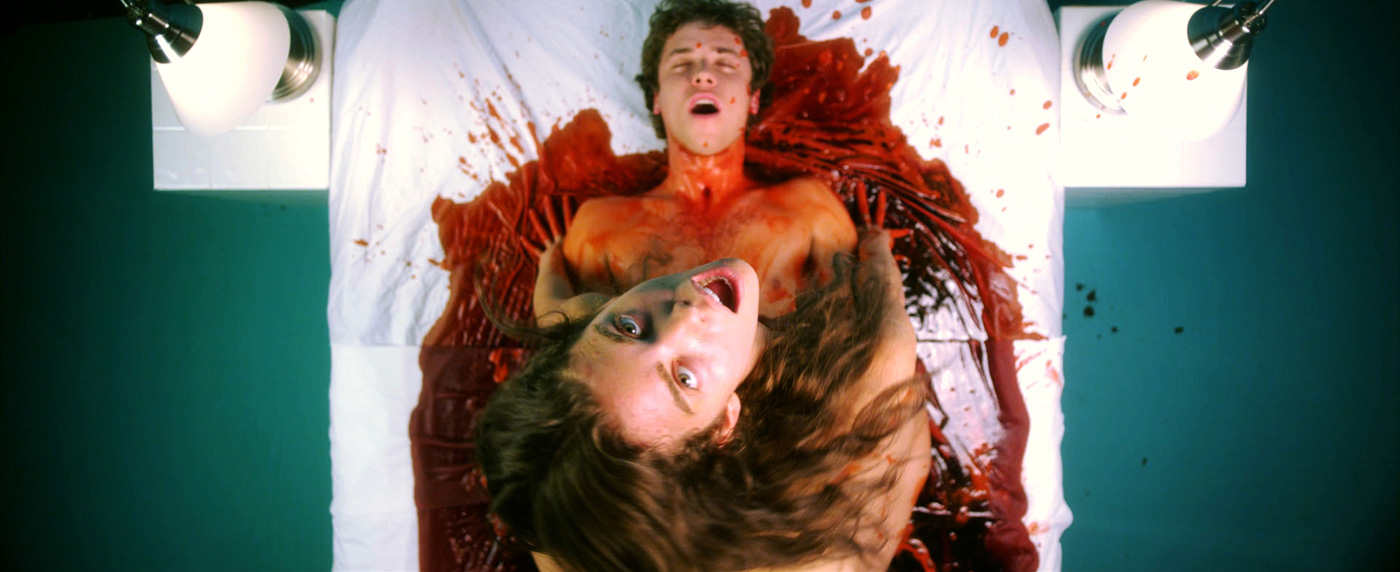
Besides a mere trailer for what can only be described as batshit horror/drama with a splash of erotica, there’s been little else in terms of marketing or promotion for Excision, other than the semi-recognisible face from E4’s 90210. AnnaLynne McCord fronts this modern Carrie-like pseudo-high school drama/horror, with a quite magnificent performance as oddball teen Pauline.

The story is the vague subconsciousness and reality of a girl with a particularly disturbing psychological imbalance, but devoid of any paranormal powers per se. She is, however, keen on the study of medicine and all things surgical, with a somewhat hazy ambition to one day enter said profession (as a surgeon). However, her clear disdain for all things academic deems such goals unrealistic.

But this is not to say Pauline isn’t without passion. Her keen interest in dissecting dead birds in her bedroom and tasting their blood reflects the film's themes, especially a recurring visualisation of blood, gore, mutilation and sexualisation – key factors that dominate her pimpled adolescent existence as she embarks on a sexual awakening that includes a curious fascination as she begins to menstruate.

There are two sides to Pauline’s character, and indeed, the narrative within the film. One is her on-the-verge-of-maturity, transitional state of girl to woman (reality), and the other being her subconscious: a much darker side that haunts her dreams with imagery of body horror gratuity and intrigued eroticism; a side that threatens to spill into real life. Aside from a Carrie comparison, her family life mirrors that of another angstful deviant: Donnie Darko. A domineering mother (Traci Lords) and placid father (Roger Bart) only antagonises a youngster plagued with more psychological issues than her ignorant household can imagine. Chastisement is a daily occurrence, until the realisation of the film's climax clicks, and the true horrors of Pauline’s mind finally unveils and spills over.

For a film that’ll puzzle many by the mere mention of its title, it's extremely well executed. The acting, especially McCord's superlative turn, is of a consistently high standard, and the script constantly intrigues, darkly amuses and feels fetishly fresh in its approach. Pauline’s character is complex and layered, and perhaps offers one of the best female performances of 2012; not that the Academy will recognise it, but they seriously should.

As unforgiving and perverse as Excision may appear, once you delve into the troubled mind dealing with numerous mid-teen issues such as angst, rejection, puberty and resentment, you begin to see the exquisite excellence of this extraordinary, if not hugely grotesque, beast.

Thursday, 8 November 2012

Review: Argo

Rating: 15
Duration: 120 mins

They often say things come in threes. Whether it be buses, accidents, or peas in a pod, it seems to be the way. But does the same rule apply when it comes to movies? Can someone with a hit-and-miss career in front of the camera produce a trio of successes behind it?

Ben Affleck has emerged as one of the industry's most promising talents, as long as we banish memory of what can only be deemed an ugly acting career, because the past half decade has seen him blossom behind the camera. Argo is Affleck's third directing effort, with Gone Baby Gone and The Town lavished with critical praise, it seems the 40-year old has finally found his niche.

Based on the real life events of the 1980 effort to rescue American diplomats pinned down in a hostile, revolutionary Iran, the Pearl Habour star asserts his now established skills at directing in a simple, yet effective manner that does an equally good job at balancing story progression with audience engagement.

Unlike his previous two, Argo tackles real life, and plays upon the intense nature of a narrative to engage its audience and drive it towards a climax. What's more, the finale of this particular film is its most rewarding part. Utterly engrossing; you'll find yourself on the edge of your seat for a good twenty or thirty minutes simply willing a peaceful resolution.

Without seeming overly negative, this is a strong and accomplished movie that does exactly what it sets out to achieve, but aside from its many pluses, there's no spark to make Argo anything more than a well made, solid movie.

However, what the film does do really well is to create and build upon a tense and edgy situation and elevates the level of danger to its peak. It boasts an understated subtlety without the need to veer into elaborately sensationalised territory, especially with Affleck's lead performance. His 'every man', reserved nature never once threatens to steal the show or hog the limelight; instead, that honour is left to a trio of sublime performances from Bryan Cranston, Alan Arkin and John Goodman. These characters, specifically, offer the wittiest moments and biggest laughs the script has to offer, and back up their quips with stand-out turns that prove memorable.

Argo is well structured, sharp, often funny and unbelievably tense at times -- more so in its final half hour. The story is consistently gripping, if not remarkable in incident, yet affirms itself as a strong Oscars contender for its decidedly capable execution of direction, screenplay and acting.

Saturday, 27 October 2012

Review: Skyfall

Rating: 12a
Duration: 143 min

There are several reasons why you can't not know about the release of the new Bond flick. Firstly, it coincides with the 50th anniversary since Connery wooed us with his suaveness in Dr. No, thus prompting the 'Bond 50' Blu-ray release. Secondly, you must be living in a batcave to have avoided the unbearable amount of tie-in advertising and promo; from watches, to beer, to cars, to computers, to aftershave, to... well, anything imaginable. Oh, I forgot Coke. And thirdly, because Oscar-winning director Sam Mendes (American Beauty; Jarhead) is taking control of the franchise for the first, and supposed, only time.

You'll have noticed a Batman reference within the first paragraph, and with just cause, because Skyfall boasts a story that attempt to express darker, similarly toned material, including character exposition, as Nolan's superhero epic. In truth, it's difficult to ignore the success of The Dark Knight, but it by no means encumbers or defines the film in question.

In construction alone, Mendes opts for a stripped down, simplistic plot in keeping with Daniel Craig's other notable depiction of the lothario spy in 2006's Casino Royale. Its goals remain focused and clearly plotted with occasional exposition, yet masses of subtext to feast on. Side characters offer what's required, and don't overexert or outstay their welcome. As per usual, the focus is Craig's mysteriously brooding 007. However, the sublime Dame Judi Dench's M is at the forefront of the story, along with newcomer Ralph Fiennes as MI6 operative Gareth Mallory. 

Javier Bardem assumes the role as rogue terrorist Silva, and offers up a most flamboyant turn that will remind Bondaphiles of villains gone by, yet situates himself in a starkly modern period. Not only is Bardem's reminiscent of characters of yesteryear, but the film, as a whole, teases and amuses with nods to the franchise in various subtle and not so subtle ways. What could easily turn into well matured Stilton is surprisingly the opposite: early Moore-era locales blend wonderfully with nostalgic touches that feel faithfully traditional to the franchise, yet mesh seamlessly with a consistent reminder of its edgy modernity.

Of course, it isn't all completely perfect. Craig asserts himself in typically awkward fashion that is both fitting to his character's persona, but also exposes a particular woodenness in his ability (noticeably when he runs/walks). It's not enough to dampen proceedings, because everything else sets the bar extremely high; set pieces are tense and utterly gripping, yet never overplayed: think the high-octane nature of Casino Royale's opening chase, and you'll have an idea of Skyfall's quality in both intro and subsequent action sequence.

To go with the raw nature of rebooted Bond is a brave poignancy Mendes generates thanks to specific plot devices. Using London as the centre of terrorism risks upsetting a lot of people, especially the unforgiving manner it expresses itself in. However, layered with an overwhelming sense of compassion and sentiment, it works both in the context of the film and as a fitting tribute to the atrocities of 7/7.

And all this is achieved with a sublime beauty courtesy of Roger Deakins, whose framing and sepia-toned lighting transforms each scene into a mouth-watering spectacle. Whether that Oscar will finally be delivered is anyone's guess, but there's surely no better platform to showcase his skills.

Skyfall is a welcomed return for the franchise. Far superior to Quantum of Solace, yet not quite on par with the superb Casino Royale for its subtlety and gritty nature, Mendes's effort compensates with juicer exposition, greater thematic passion, and a focused simplicity rarely seen in billion-dollar franchise blockbusters.