Saturday, 29 October 2011

Halloween Weekender Review: Paranormal Activity 3 (Cinema)

Rating: 15
Duration: 84 mins

The third and most expensive instalment of the series gets yet a new directorial partnership in the form of Catfish makers, Ariel Schulman and Henry Joost. However, a fresh set of eyes doesn't necessarily constitute a more original approach. In fact, the latest offering is perhaps a little too familiar to the tried-and-tested scares the former ones rely on.

The aesthetic of PA3 isn't just reminiscent of the the first and second: it's exactly the same; a mere extension as the heightened tension and interesting plot exploration looks set to smoothly follow up, albeit it in an earlier timeline. 1988 to be exact, where previously featured sisters Katie and Kristi are young girls growing up with mother, Julie (Lauren Bittner), and boyfriend, Dennis (Christopher Nicholas Smith), whom, in their new home, experience some spooky goings-on to say the least. 

Those who have seen the prior titles will instantly feel a home because (positively or negatively, depending on your opinion) it's basically a carbon copy and doesn't offer anything new (whether such a format change would work or indeed will do for [REC]3 remains to be seen). The family set up cameras around the house as we witness the night-time events of said recordings and await the somewhat predictable jumps and slight movements with the clever and low-key special effects.

Assuredly there are a fair few shocks to be had, which are part-and-parcel of the deal when you see a PA flick. Included are some new touches, notably an oscillating camera that brilliantly pans between the living quarters and kitchen area, building the tension for an inevitable terror or subtle entity addition to the surroundings. As far as serving its purpose, we are privy to intimacies of family life coupled with bumps-in-the-night and plenty of psychological terror itself. 

Because the story is in the past, we've already been set-up with characters, plot points and details, so PA3 doesn't dwell too much on these aspects, instead opting to use genre conventions to drive proceedings whilst hinting at back-story as underlying frivolity. Such disposition stands out as narratively the weakest picture. An abrupt ending doesn't bode well either, but arguably doesn't require such information because it's already in context in its franchise story arc.

Worthy of mention is the youngest actor, Jessica Tyler Brown, who plays Kristi. She exudes a classic American cuteness and shows promise for the future with her natural ability. By far the most rounded character, she proves very likeable whereas the remainder of the family aren't particularly explored as we never begin to relate to them at any point, thus always rendering distance between the audience and those screaming away on-screen.

Paranormal Activity 3 doesn't tread any new ground and is notably the weakest entry so far. The fresh scare techniques are startlingly effective, only marred by a lack of genuine innovation and overall it doesn't pack in as many terrifying moments as one ultimately hopes for. Nonetheless, a worthy horror to grip and unnerve for 84 minutes.

★★★

Friday, 7 October 2011

Review: Tyrannosaur

Rating: 18
Duration: 91 mins

Based on the BAFTA winning short, Dog Altogether, Tyrannosaur sees British talent, Paddy Considine, assume control of his first feature both behind the camera and in charge of the quill. Starring Peter Mullan and Olivia Colman in a drama that'll shock, grip and emotionally affect you with the authentic nature of its subject matter, audiences are presented with a chillingly real depiction of domestic abuse and anti social behaviour.

Considine is utterly confident in his debut as he asserts himself with such assurance behind the camera; you’d think he’d been doing it for some years.

The pacing is methodically slow, but works well with the raw imagery and subtly realistic performances that form the illusion of two societal classes (working and middle) clashing, gelling and inevitably merging into one. Colman plays Hannah, the wife of successful, sports-car-driving husband, James (Eddie Marsan), juxtaposed with Mullan’s Joseph, whose roughest-of-the-rough lifestyle is evident. He lives alone, surrounded by the underprivileged, including young Samuel (Sam Bottomley), a character that temporarily eases the depressing nature of life with beyond-his-years charm as well as innocence.

The edit is also slick and direct with pinnacle-moment cut-aways, voyeuristic observations, as Considine is clearly objective and non-sentimental, which serves the end product well.

The script is brutally honest at times, as it maintains tension with the sheer volatility of personalities, most notably Mullan, who recklessly explodes mainly because there are no repercussions for him. There's no one in his life to question such actions, until Hannah that is. What's worth noting is that it took a mere seven days to write the 90 minute film, albeit it with the aid of an existing premise, context, characters and cast, which translates into a fascinating commentary on human behaviour, restraint and subserviency; you’ll notice a parallel within each character’s life, with constant shifts from disdain to empathy. The real beauty of the piece as it displays the talent of the director/writer, and how tonally he construes the idea to the big screen effectively. Joseph, who is essentially the film’s protagonist that suggests redemptive undertones, accentuates this perfectly with his obnoxious and frankly disgusting behaviour, yet at points it is hard not to support him in his plight.

Performance-wise, Mullan more than convinces as a dishevelled, well-worn man who's living an unfulfilled existence since the death of his wife. A close-up shot of his face resembles the dry, wrinkly scales of said film title, yet isn’t what it refers to. In fact, the title can be likened to several intrinsic elements, and is only explicitly referenced at one point. 

The driving force and heart of the script is the stand-out offering from Olivia Colman. For someone very much typecast to comedy, especially British TV series Peep Show, she displays remarkable resilience to avoid falling into her familiar role, instead delivering an opposite-end-of-the-spectrum performance, with a completely contrasting character that has no remnants of the bubbly Sophie. Certain for BAFTA, if not Oscar nods, Tyrannosaur is a break-through film that introduces Colman as a genuine, serious talent and merely confirms Mullan's already fantastic ability, too.

Tyrannosaur is gut-wrenching, both as a result of its violent and emotional outbursts we bear witness to. An underlying notion of danger and trepidation generates some unbelievably intense moments, which is strangely complemented by tender embrace. The acting is intensely flawless and unforgiving, as Considine deserves praise for an engaging, compelling and superbly crafted first attempt.

★★★★

Sunday, 2 October 2011

Review: The Lion King 3D

Rating: U
Duration: 89 mins

Since its release almost two decades ago, Disney's renaissance period of the 90's is perhaps typified by the release of The Lion King. Whether you've seen it or not, the characters and the songs are universally recognisable. From Simba to Mufasa, The Circle of Life to the infectiously likable Hakuna Matata, it's hard to deny this is one of the studio's greatest achievements to date. Such quality is accentuated by its global success and remains the highest grossing, hand-drawn animated feature in history with almost $800m in box office takings.

In a classic story structure inspired by Shakespeare's Hamlet, as well as the age-old biblical poem, Epic of Sundiata, Simba (Jonathan Taylor Thomas), is forced by evil Uncle, Scar (Jeremy Irons), to flee after the death of his father, and King to the pride lands, Mufasa (James Earl Jones). It excels with it's simple, yet hugely engaging narrative and storytelling devices. An all-star cast is standard for Disney, and this is no exception, with lead voices from Matthew Broderick, Rowan Atkinson, Nathan Lane and Whoopi Goldberg.

Aside from the superb soundtrack and score courtesy of legendary duo Elton John and Tim Rice, every other department delivers, thus making Disney's 32nd film a truly timeless classic. Whether it's the perfectly choreographed introductory sequence to Pride Rock, or the tension of the elephant graveyard chase or even a touching long-lost flirtatious reunion; The Lion King uses its 89 minutes to pack in essential content, rather than surmountable filler.

The notable adaptation is a remastering of the original theatrical cut, only this time with the addition of 3D (gasp). As per the saturation of the format, scepticism naturally surrounds the suffixed title. However, what makes this release an improvement upon the original is the meticulous way in which the third dimension is incorporated; the painstaking efforts to assure such a conversion stands out from other such titles is its dedication to use it to its true potential. Not since Avatar has the format been used so effectively, with an open invitation to immerse audiences into the story even more so than the first time around.

A classic in every sense of the word with no apparent flaws that stand out, not even the 3D element can hinder the wonderful experience on offer, which is a huge bonus considering the sloppy use of the format elsewhere. Iconic in its nature, Disney have updated one of their best titles, as The Lion King becomes accessible to a new generation of cinema goers, yet to those familiar with the movie it feels just as special as it did almost twenty years ago.

★★★★★

Sunday, 25 September 2011

Review: Crazy, Stupid, Love

Rating: 12A
Duration: 118 mins

It's not unfair suggesting romantic comedies (or rom-coms, as the cool kids say) are ten-a-penny and is a sub-genre that forms the perfect date night fodder. The problem with the format is that for every successful effort, there are a dozen duds. And why? Well, more-often-than-not the rom-com is a genre so saturated with monetary motives, it can easily lose its integrity until a rare gem pops up.

Fortunately, with duo Glen Ficarra and John Requa at the helm - the writers of such quality comedy as Bad Santa - initial signs are positive, and thankfully the likes of Sarah Jessica Parker or Jennifer Aniston are nowhere to be seen. Writer Dan Fogelman (Tangled, Bolt, Cars), assumes script control with an impressive cast consisting of established and new talent: veterans Julianne Moore and Steve Carell star with (relative) newcomers Ryan Gosling and Emma Stone, in a smartly written romantic comedy that sets itself apart from the norm.

After discovering his wife Emily (Moore), is having an affair with work colleague David (Kevin Bacon), Cal (Carell), stumbles into a mid-life crisis of singleness until he meets smooth-talking, lady-killer Jacob (Gosling), who vows to turn his luck around and make him a success with the opposite sex. Meanwhile, we follow a subplot with Hannah (Stone), who, unconvinced she's with the right man, stifles an impending marriage to Richard (Josh Groban). As Cal embarks on a series of promiscuous shenanigans, his teenage son Robbie (Jonah Bobo), has pending issues of his own: an insatiable, yet amusing love for his slightly older babysitter, Jessica (Analeigh Tipton).

The writing of these parallel stories are slick, as they intertwine occasionally; it rarely slackens, as this intelligent comedy never opts for cheap laughs, instead adhering to a more sophisticated take. Crazy, Stupid, Love is a surprising and endearingly romantic comedy. It has mass appeal to both genders for many reasons. Relatable leads such as Stone and Gosling will satisfy the younger audiences: the former is somewhat of a female role model, as well as a pretty face for the male demographic, and the same can be said for Gosling who possesses a metrosexual appeal: girls want him as their boyfriend and guys want to be him. For the most part, the characters remain hugely enjoyable, even through the conflicts that occur in the plot. They are hard to dislike as neatly constructed, yet flawed people presented to us.

Carell and Gosling form a strong bond as the leading men that make up the main story: we follow them from an initial awkward meeting as they develop a friendship through the art of seducing women. They bounce off one another well, as their character arcs change as the script develops. Indeed, we become privy to a world of male bonding via the techniques they use to pick up women- one particular conquest of Cal's comes back to cause him problems just as a glimmer of hope shines for his marriage.

Tonally the film is a mixture of feel-good and emotional despair. Suffice to say, it actually works very well with such starkly contrasting scenes, especially with a comedic element throughout as the issues of love, loss and relationships ring true. We cannot help but join Cal during his emotional rollercoaster of liberating highs and marriage crushing lows.

Audiences are rewarded with an amusing twist towards the conclusion as it rounds-up in a pleasing, yet predictably resolute manner that delves deeper than many of its competitors, whilst sustaining the surrealism of the genre. In avoiding constant clichés, it comes across as fresh and, with Jacobs's suaveness, makes it a more palatable experience and one audiences can actually engage with rather than passively enjoy as a mere popcorn flick. 

Crazy, Stupid, Love is the smartest and most likable comedy of the year. It's witty, funny and sharply written, as it avoids feelings overly familiar and clichéd. Each story thread is well paced, which culminates in an unpredictable, yet hilarious climax. The roles are cast well, with charming turns from Gosling and Carell, as well as great support: this ticks all the boxes and then some.

★★★★

Friday, 23 September 2011

Review: Warrior

Rating: 12A
Duration: 140 mins

You might sense déjà vu when you come face-to-face with Gavin O'Conner's tale of underdog turned prized fighter and it's hard to look past the idea that Warrior is little more than a hybrid of The Fighter, Million Dollar Baby and the Rocky movies rolled into one. However, scratch beneath the clichéd exterior and you'll discover something a little special with more depth.

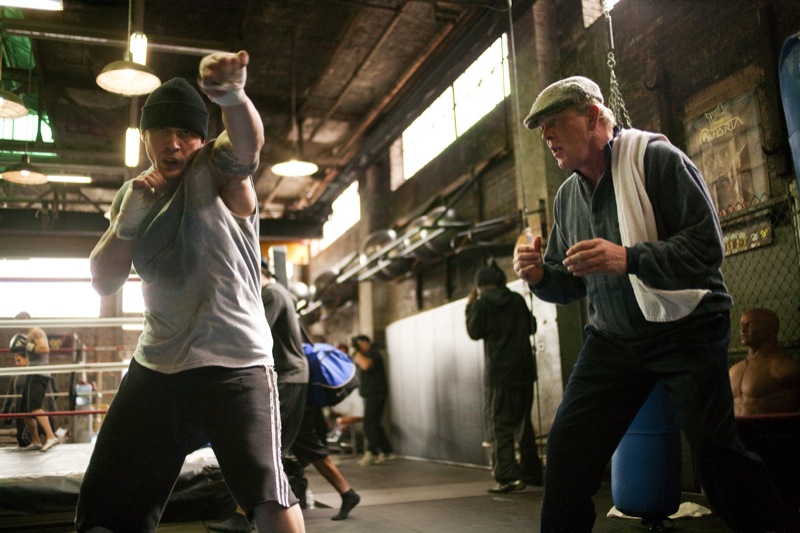
First and foremost, Warrior is a drama. It's set within the context of sport (Mixed martial arts) that takes a back seat until the final third of the movie. The three major components that form the narrative are ex-fighter and reformed alcoholic, Paddy (Nick Nolte), short-tempered drifter, Tommy (Tom Hardy), and physics teacher/family man, Brendan (Joel Edgerton). The latter two are separated brothers with Nolte as their shunned father. The plot involves Tommy returning to his hometown after a long absence and, as a result of a YouTube video showing him pounding a UFC contender to a pulp, enlists his old man to train him. Meanwhile, across the other side of town, Brendan re-enters the fighters’ cage after realising his teaching job isn't enough to prevent his home from being repossessed. The two stories run parallel, occasionally overlapping until the pair are reunited at a UFC tournament.

The film progresses as a complex drama that sets its leads up as dysfunctional and uncommunicative alpha males; this is a film packed with testosterone as it's tonally juxtaposed with muscular, broad physiques, most notable that of a beefed-up Hardy. It is the actors’ physical presence that adds authenticity to the characters, as Nolte could quite easily be a washed-up fighter battling the torment of booze, loss and alcoholism, not to mention the complete disconnection from his family. 

The tension within the trio makes for some gripping, as well as emotionally fuelled scenes; at times the abuse Paddy gets from his sons, mainly Tommy, is heartbreaking, but this dislike for one another can also serve up some raw and very touching moments too.

Due to the nature of the film it is imperative to mention the performances and in this instance they must deliver as the weight and depth of the script is measured on how said characters are brought to life. Hardy offers us a tortured soul that struggles with his inner demons to communicate on a basic human level. He looks the part too, as his visible commitment to bulk-up for a role (which includes some beast-like trapeziums) draw comparisons to the Christian Bale School of Method Acting. He handles a short-fused persona convincingly, often void of decency as he flies-off-the-handle, however Hardy perhaps doesn't offer the standout performance you’d expect. That accolade is left to Nick Nolte who, without question gives one of his best career performances. His down-and-out oddity and gruff voice of a broken-man really tug at the heartstrings, and even though we aren't explicitly informed of the family's turbulent past, we cannot help but feel for the man abandoned by his offspring. 

What's refreshing, and ultimately avoids complete cliché, is the lack of back-story of our characters; never once are we subject to a flashback in order to explain a person’s motive or bitterness towards another. Instead subtle dialogue hints at feuds gone by without the need to spoon feed us. This aspect makes it a tad grittier as combining with an intimate, handheld shooting style and comes across like we're intruding on a family dispute as opposed to merely observing a film.

Speaking of style, when it comes to the fighting O'Connor handles it with poise as it maintains a credibility with its sharp direction and edit; a slick, ultra fast pace represents the frantic and ultra intense style of MMA, yet holds a professional validity. Unlike The Fighter, where bouts consist of men possessing unlimited stamina as they knock ten-bells out of one another at lightning speed, Warrior is more composed and true to reality. Its choreography is its strength as a large portion of fisty-cuffs occur in the final third, which is the turning point where the film steps up a notch and away from the methodically paced drama.

For most part, the dialogue is good. Aside from spurts of classic underdog lines- as seen throughout the Rocky series with its 'every-dog-has-it's-day' spiel- it narrowly avoids completely falling into a pit of triviality. It is this zero-to-hero formula that drives the narrative and gives it passion, if a little too conveniently at times, as it conforms to patriotic, American-ideology. Both brothers go from being nobodies to competing on a world stage and through plausible, yet questionable plot devices, the script allows this to happen, which again can be seen as a criticism on the writing.


Towards the end, Warrior begs the question as to its outcome: what will happen, who will win and so forth, as an alternative, yet highly emotive conclusion plays out as the film finishes exactly where you want it to. In fitting with the feuding relationships during the narrative- yet in stark contrast to the familiar nature of the rest of the movie- O’Connor doesn't offer us anything resembling a feel-good, Hollywood ending per se, which again is one of the picture's strengths. We are, however, at least presented with some clarity in reference to the emotional roller-coaster experienced over the two hour slug, which is gratifying in itself.

Warrior is a very character driven effort. It's well executed and displays an emotional depth and complexity that renders it a worthy sports-drama. Hardy and Edgerton do fine jobs, but Notle is the shining light here, he is the backbone to the story, holding everything together as the subsequent magic stems from his actions. Expect an Oscar nod for the veteran, as well as for director Gavin O'Connor's achievement too.

★★★★

Tuesday, 20 September 2011

Review: Tinker, Tailor, Soldier, Spy

Rating: 15
Duration: 127 mins

Without doubt the trailer of the year award goes to Tinker, Tailor, Soldier, Spy. It's not an exaggeration either to describe it as one of the most atmospheric and tense teasers in years, but can the film live up to the flawless trailer? In the capable hands of Let The Right One In director, Tomas Alfredson, you would assume so and based on the John le Carré novel; again, all implications are positive. The 1979 series starring Alec Guiness was well received and is regarded as a hidden gem in television. In all, the movie adaptation has a hell of a lot to live up to, especially in regards to the Oscar buzz emanating from Gary Oldman's performance.

Recent MI6 retiree, George Smiley (Oldman), is summoned back to uncover a Soviet mole within their presence. Smiley, accompanied by Peter Guillam (Benedict Cumberbatch), begins a secret investigation away from the prying eye of Government bods, Bill Hayden (Colin Firth), Percy Alleline (Toby Jones), Roy Bland (Ciarán Hinds), and Toby Esterhase (David Dencik), in the hope of uncovering said traitor.

What's clear from the beginning is that this is no normal film; it's a different kettle of fish to a typical mainstream thriller and can be described as a 'film lover's film' because technically it's very accomplished. It is meticulously directed, nicely lit and boasts some beautiful cinematography as well. Its other strengths are clear too, as the British ensemble exudes such poise and subtlety as they complement one another's performances and convey an authentic 1970's, Cold War era. The costumes, as well as locations, are spot on as the realism is accentuated by the grainy, grey filter over the entire film.

As the story progresses there are moments of tension and danger as characters become ever paranoid in regards to a double agent's identity. However, there's not nearly enough intensity as you would expect, more-often-than-not opting for a methodically slow-paced approach rather than forcing you to sweat it out.

Focally the film shifts between time periods through flashbacks, but we're never informed of these changes, which often become apparent during or after the scene has concluded. There's no need for this ambiguity as it serves no purpose; Alfredson doesn't try to shock nor reveal anything of significance, which begs the question regarding the absence of clarity. Furthermore, the story fails to fixate on anyone in particular; Oldman is the predominant 'lead', but we are presented with sub plots from side character perspectives, thus preventing us from completely engaging with a sole protagonist. It is this disregard for clarity and focus that prevents you from bring lured into the thick of the conspiracy, often relying on intuition to deduce Alfredson's motives regarding the constant shifts.

On a positive note, aside from Oldman, other performances that demand attention are Mark Strong's Jim Prideaux and Tom Hardy's brief, yet powerful role as Ricki Tarr. Both actors offer convincing interpretations as each are responsible for some emotionally touching scenes. For either to receive a supporting actor nod isn't out of the question either.

What feels like a missed opportunity is the immediacy of danger- or lack of it. Rarely are we presented with anything other than conversations between main characters. At times it can appear confusing as to what exactly is happening and which people are being discussed as the film tackles the story in a subtle, yet rather vague manner. It therefore becomes difficult to follow as you constantly play catch-up trying to figure out what has just occurred.

Key aspects- including the reveal- are underplayed and could have been constructed to build much more apprehension, thus having more impact as an engaging narrative. Whilst it boasts immense atmosphere, the fundamental elements of a thriller are absent as it fails to keep you on the edge of your seat, instead forcing your brain into overdrive to keep up with the complexities of the narrative.

Tinker, Tailor, Solider, Spy is an alternative film that can both appeal to and alienate mainstream audiences. It's a very slow burner that'll perhaps appeal to the purer cinema lover within, as Alfredson offers up a whodunit-thriller with superb acting and an authentically set story that is unfortunately marred by a lack of pace and tension. The Cold War setting is painstakingly constructed as it succeeds in drawing the viewer into a world of trust, espionage and paranoia, but it's a shame these positives are weighed down by too much ambiguity and a confused script, not to mention a missed opportunity to truly grip and enthral like the trailer promises.

★★★

Monday, 19 September 2011

Review: Drive

Rating: 18
Duration: 100 mins

Unless you've been living in a vacuum for the past year, you'll know that Ryan Gosling is fast becoming Hollywood's hottest talent. With lead roles in Lars and the Real Girl, Blue Valentine and the imminent Crazy, Stupid Love, the Canadian born actor is renowned for his deep and multi-layered portrayals, but the question is this: does his latest offering expose us to the same raw, gut-wrenching emotion?

There's no definitive answer as Gosling exudes a softly spoken, believable character, yet stars in a movie very different to his existing résumé. We don't see the extreme vulnerability as per Blue Valentine, but are given enough to whet our appetites. Combine this with a rogue-like sensibility, he exposes a gentle quality and ruthlessness, which work beautifully together.

A roaring success at Cannes this year, Drive won Best Director as well as a nomination for the Palme d'Or after receiving a standing ovation. Essentially Drive is an indie production, constructed through filmic and cultural influences. It falls nicely into the cult category without the need to follow suit with mainstream conformity as it shows the quality that can be produced on a mere $13m budget. It comes across as  slick, amusing, thrilling, touching, as it encapsulates an intensity that remains throughout. It is this compelling aspect that makes the film so watchable and more importantly, memorable.

The self-contained story sees a man known only as Driver (Gosling), sustain a career as a part-time stunt driver and underpaid mechanic for garage owner, Shannon (Bryan Cranston). On the side he also offers his automobile skills as a getaway driver too, which is the catalyst for the story. His path crosses with single mum, Irene (the effortless Carey Mulligan), who he befriends- along with her young son Benicio (Kaden Leos)- before finding out her crook-of-a-husband, Standard, (Oscar Isaac) is to be released from jail. Subsequently Driver gets entangled in the ex-con's unpaid debts after offering his assistance out of concern for Irene and the boy. Further into the story, Blanche (Christina Hendricks) shady mobster, Nino (Ron Pearlman), and dodgy businessman, Bernie (Albert Brooks), are introduced, but feature non too heavily. Brooks asserts himself with a callous efficiency that adds a notion of danger as he tackles the role convincingly. 
  
It's clear from the opening shot that director, Nicolas Winding Refn (Bronson), is influenced from 70's and 80's culture; notably the soundtrack of ballads juxtaposed with edgy beats works wonders, which is superbly fused together, heightening tones of romance, despair, and the ultra-fucking-cool. The addictiveness of the soundtrack captures Driver's persona, reflecting his inner torment and isolation against the bright lights of the big bad city. The film offers a B-movie and film noir aesthetic with nostalgic nods to films such as The Driver and is reminiscent of Mulholland Drive. With visual references such as fast cars and chases, Drive pays cultural homage whilst maintaining a gritty modernity. A younger generation will pick up on a GTA: Vice City vibe, as the script is packed with era references, culminating in a retro nostalgia we all want in on.

The central relationship is incredibly balanced. From the moment Driver and Irene meet, the chemistry is so abundant as the pair exchange silent, longing glances as a relationship gradually builds. Mulligan's dimpled-smiles complement Gosling's assertive smirks perfectly. In fact, the strength of their performances gives the film a much needed depth, balancing human fragility with the more frantic, and at times, ultra violent nature. 

On more than one occasion the violent and bloody encounters not only shock, but enrich Gosling's character; never are we offered any back-story or history to him, but we can interpret the kind of man he is as he bonds with Benicio, in comparison to the horrificness contrast of caving a man's head in. This element of European art house cinema certainly give the film an angst-laden, tough exterior and is a pleasant separation from mainstream fodder.

There's no denying Gosling's appeal: a bewitching, charismatic charm he brings to the table that gives audiences no choice but to be 'wooed' by his alluring, yet reserved presence. His scorpion jacket, shades, toothpick, driving gloves, all form a stylish iconography, which visually portrays an interesting loner character with an unknown history; the beauty is not knowing his past prior to the film, thus creating a enigmatic persona you can strangely relate to. His attire doesn't feel gimmicky. It doesn't try to be cool, it is cool - he pulls it off with ease, which makes Driver a man with desirable attributes that viewers will surely be drawn to.

Winding Refn directs with a single-minded confidence as he both shoots and tells the story in a technically competent and clear manner. The imagery is stunning as well; breathtaking LA skylines, murky city streets, subtly lit interiors; it all feels part of an ever-moving, yet surreal world. Winding Refn articulates the script well and captures the essence of the main character exquisitely. We are constantly encouraged to back our protagonist even through the more gruelling segments until the ambiguous ending captures the tone of the film sublimely. 

Drive is a gripping, yet emotionally charged action film with notable performances from Gosling, Brooks and Mulligan. It's consistently thrilling, hugely likable and accompanied by a fantastic soundtrack that makes this the complete package. Winding Refn avoids succumbing to clichés as it progressively becomes more intense and violent before its boiling-point and fitting conclusion. Anything but a mainstream movie, it's got potential to become a cult classic with style and substance, coupled with a charm and dexterity that only a talent such as Gosling can pull off.

★★★★★

Friday, 16 September 2011

Review: The Change-Up

Rating: 15
Duration: 112 mins

Another comedy rears its head in the post-summer months that has seen the genre squeezed dry with the likes of Horrible Bosses, The Inbetweeners, Bridesmaids and the soon to be released, Crazy Stupid Love; are we in need of anymore? It would appear so, as Jason 'I'm everywhere at the moment' Bateman stars alongside Ryan 'I've had a quiet summer' Reynolds in this Freaky Friday-style mind switch movie.

The premise of The Change-Up will feel familiar because it's been done a dozen times before. As good as some may have been -such as the Tom Hanks starring, BIG - the notion of two people swapping minds/brains/bodies is naturally far-fetched and here David Dobkin's (Wedding Crashers) effort is no exception. Undeniably, the biggest qualm to get your head around is this premise and whether you chose to contextualise it within the grand scheme of fantasy-comedy, the film can't escape from being plain daft. If you can overlook this, then you will be satisfied with a film that serves its purpose.

Best friends Mitch (Reynolds) and Dave (Bateman), have very contrasting lives; Mitch is a single, free-living, metro-sexual ladies man, whereas Dave spends his life working a high powered job, supporting wife, Jaime (Leslie Mann), and looking after their kids. The pair utter the inaugural words 'I wish I had your life' whilst urinating in a public fountain one drunken night and wake up the following morning - you've guessed it - in each other's bodies. The complication arises when they return to the fountain to discover it has been moved and therefore spend the movie tracking it down. Whatever unbelievable swap that has occurred is beyond the point; the real test is whether they can do a convincing job of playing one another's character.

The laughs comes thick and fast, ranging from toilet humour to slap stick as it succeeds in entertaining and, low-and-behold, actually being funny. From early on we are set up with the decline of Dave and Jaime's marriage, Mitch's insatiable desire for the ladies as well as the deteriorating relationship with his father played by Alan Arkin. It's a given that these factors will inevitably play a part further down the line, as does the romantic complication with Dave's colleague, Sabrina (Olivia Wilde). 

Bateman and Reynolds do their best to portray the other and end up feeling like impersonations at times, whereas during others you cannot tell; it's very hard to distinguish a separation between both personalities. However, looking at it from purely a comedy perspective, it safely delivers plenty of laughs along the way, albeit in a crass way.

What it tries to do is delve beyond a juvenile exterior with some exploration of relationships, friendship and life, but never manages to do so convincingly. Instead it reverts to reliable humour of the toilet variety (quite literally in some instances). It does score points for at least attempting something with a little more substance, yet does so heavy handedly. 

The Change-Up is a crude, yet amusing comedy crammed with facetiousness and typical set-ups for the purpose of making audiences giggle (sometimes in disgust). Throughout, it remains entertaining even though the catalyst for the film is a thin, worn idea, it only dragging occasionally. Bateman and Reynolds do a fine job as a duo but ultimately it's nothing we haven't seen before. A typical 'popcorn movie' that displays some heart but it, along with a majority of its genre siblings, is far too forgettable.

★★